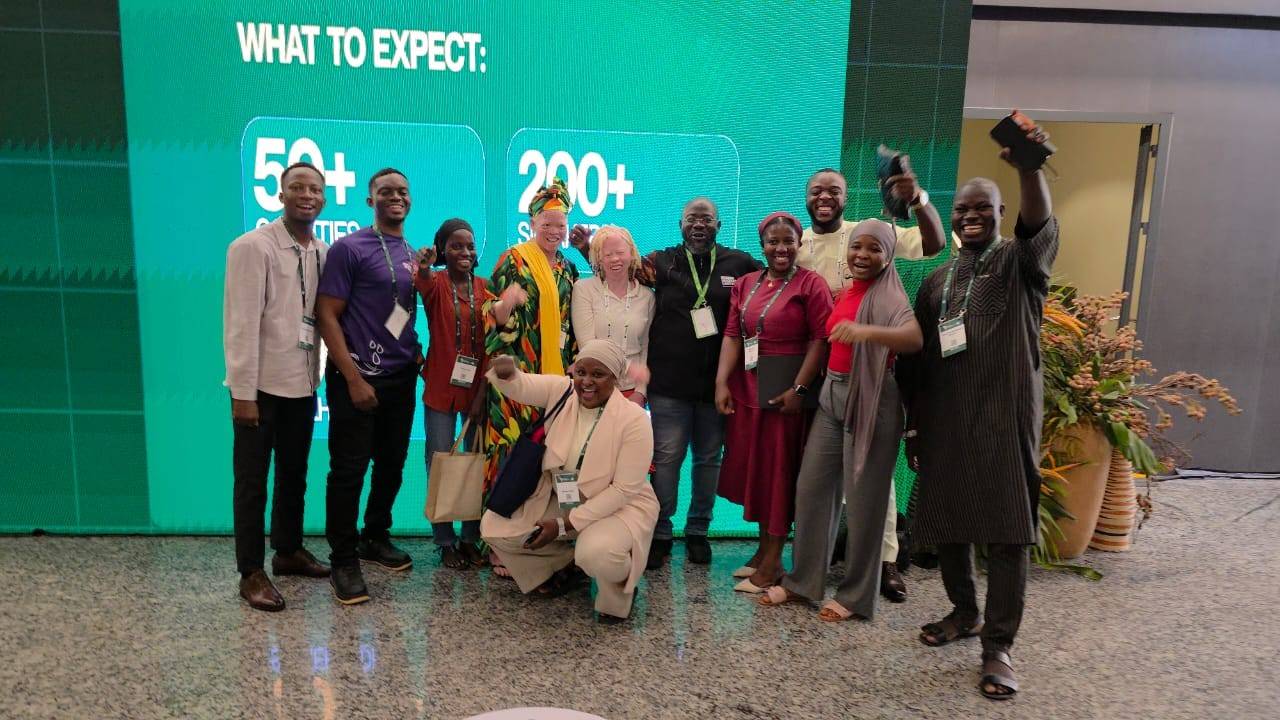
For Mushplus, DeliMush, PureLube, Tekcycle, Grow For Me, Kodu Technology, Grainwell Enterprise and Dizembela Enterprise, the journey to the Africa Food Systems Forum (AFSF) is part of the broader discussion about youth, connecting markets, African food systems and sustainable agriculture.
It began much closer to home—with a problem, an idea and a young entrepreneur willing to ask, “What if we could do this differently?”
Today, those ideas are being showcased as part of the African solutions to sustainable agriculture and agribusiness.
At the Africa Food Systems Forum in Rwanda this year, the eight businesses were part of a growing group of Ghanaian enterprises demonstrating that Africa’s food systems are not only about what farmers produce. They are also about the innovations, technologies, products, markets and jobs that young Africans are building around agriculture.
For KIC, their presence represents something bigger than participation at an international forum. It is a reflection of what can happen when young entrepreneurs are given the opportunity to test their ideas, strengthen their businesses, access networks and connect with markets.
What is more interesting is that these businesses are present at the forum courtesy of other programs within the agricultural and sustainable development ecosystems, showing how an idea that once begun at KIC can grow to deepen impact in other similar programs across the ecosystem.
When food innovation starts with a simple idea
For the team behind Mushplus AgriFoods, the opportunity lies in making nutrition more accessible and convenient.
Mushplus is developing mushroom-based food products, including mushroom-fortified instant noodles and a ready-to-eat mushroom-soya mix. The business is part of the KIC AgriTech Challenge Pro ecosystem and was among the businesses recognised in the programme. At AFSF, Mushplus is not simply presenting a product.
The team is carrying a message about the possibilities that exist when locally available agricultural resources are transformed into innovative food products that respond to changing consumer needs.
It is a story about food innovation—but also about creating businesses that can grow.
DeliMush: Growing more than mushrooms
For DeliMush, the mushroom is only part of the story.
Based in Ghana’s Northern Region, the business processes locally grown mushrooms into nutritious products while building opportunities for women and young people within the mushroom value chain. Through training, women have been supported to establish mini mushroom farms and become part of a supply network that connects producers to markets.
That means every new market opportunity has the potential to create impact beyond the business itself.
For DeliMush, scaling is therefore not simply about selling more mushroom products. It is about creating a stronger ecosystem around farmers, processors and consumers. And that is precisely the kind of interconnected thinking that Africa’s food systems conversation needs.
PureLube: Finding value where others see waste
Then there is PureLube, where the journey from agriculture to industry takes an unexpected turn.
The young team discovered an opportunity in something often treated as waste: cashew nut shells.
Today, PureLube is transforming those shells into eco-friendly grease, creating a bridge between agriculture, manufacturing and the automotive sector. The business has been supported through KIC’s entrepreneurship ecosystem having started through the AgriTech Challenge Pro.
Its story became even more significant at the 2025 Africa Food Systems Forum, where PureLube won a GoGettaz Agripreneur Impact Award and received a US$15,000 grant to support its expansion.
For the PureLube team, being in Rwanda is another proof that a solution developed around an agricultural by-product in Ghana could command attention on a continental stage.
TekCycle: Turning Waste into Opportunity
For TekCycle, the food systems conversation extends into the challenge of what happens to materials after they have served their first purpose. The business is building a circular economy solution that transforms waste into useful products and opportunities, demonstrating how young African innovators can turn environmental challenges into viable businesses.
At AFSF, TekCycle brings an important perspective to the conversation: building resilient food systems also requires responsible approaches to waste management, resource recovery and sustainable production. Its presence alongside other KIC-supported businesses shows the diversity of solutions emerging from Ghana’s youth entrepreneurship ecosystem—and how innovation can create value not only from what agriculture produces, but also from what it leaves behind.
Grow For Me: Connecting farmers to finance and markets
For Grow For Me, the challenge is one that farmers across Africa know too well: having the potential to produce, but lacking the right financing, market connections and support to do so consistently.
Grow For Me has developed an agricultural technology model that combines input financing, commodity aggregation and digital trading to connect investors, farmers and buyers. KIC’s business profile notes that the company has worked with more than 10,000 smallholder farmers and has built a model around co-financing, aggregation, trading and commercialisation.
The company’s journey illustrates another important dimension of food systems transformation: farmers need markets and financial systems that work with them, not around them.
At AFSF, Grow For Me brings that perspective into conversations about how technology, finance and market access can help smallholder farmers participate more meaningfully in Africa’s agricultural economy.
Kodu Technology: Where agriculture meets dignity
And then there is Kodu Technology, whose innovation reminds us that agricultural transformation can create solutions far beyond conventional food products.
Kodu Technology developed Kodu Pad, an eco-friendly sanitary pad made using agricultural waste, including banana and plantain fibres.
The innovation earned the attention of the continental entrepreneurship community when Kodu’s co-founder, Dr. Mohammed Faried, emerged as one of the grand prize winners of the 2024 GoGettaz Agripreneurs Prize at the Africa Food Systems Forum in Kigali. The business received US$50,000 to support its growth.
Kodu’s story is particularly powerful because it demonstrates the wider possibilities of agricultural innovation.
An agricultural by-product can become a health solution.Waste can become an economic opportunity. And an idea developed by young Africans can address challenges that extend across communities and countries.
Mushplus, DeliMush, PureLube, Grow For Me and Kodu Technology operate in very different spaces.
One is transforming food. Another is building a mushroom value chain. One is turning agricultural waste into industrial products.
Another is connecting farmers to finance and markets. And one is transforming agricultural waste into an affordable menstrual health solution.
And there is Grainwell Enterprise and Dizembela Enterprise who attended courtesy of AGRA, under the Expanding, Mentoring and Coaching to build capacity and expand access to technical and financial resources for disadvantaged youth in agriculture Project. This forms part of the broader Youth Entrepreneurship for the Future of Food and Agriculture (YEFFA) Programme that AGRA is running in partnership with the Mastercard Foundation. The programme aims to catalyze dignified and fulfilling work for young people, especially young women, through investments that unlock system barriers, build resilience, and enhance capabilities to promote inclusive growth in sustainable food systems, while empowering young people.
Eight businesses. Eight journeys. One bigger story.
Africa’s food systems will be transformed not only by policies and investments, but by the entrepreneurs building solutions every day.
Their participation at AFSF creates opportunities to meet investors, development partners, policymakers and potential business collaborators. More importantly, it gives these businesses a platform to demonstrate what Ghanaian innovation looks like when it is given room to grow.
For KIC, this is the essence of building an entrepreneurial ecosystem—creating pathways through which promising ideas can move from innovation to enterprise, from enterprise to market, and from market to impact.
The bigger opportunity now is to ensure that businesses like these do not simply make it to the international stage.
They must be supported to stay competitive, access capital, enter new markets, build partnerships and scale across Africa.
Because the future of Africa’s food systems is already being built.
And in Rwanda, eight Ghanaian businesses affiliated with KIC were making sure the continent gets to see—and hear—their part of that story.